
The Last Egg

by Melody Cooper

A poignant speculative fiction story exploring climate displacement, scarcity, resistance, and the enduring power of compassion. Set in a near-future Los Angeles ravaged by environmental collapse, an elderly activist uses her final precious egg to create a moment of hope for children living in a refugee camp. Rich with themes of family, memory, justice, and human resilience, Cooper’s moving tale asks what it truly means to survive—and how kindness can become an act of revolution.
I stood, looking at it sitting solo in the cardboard container with eleven empty spaces. Maybe I should have waited, but the lilt of my mother’s Trinidadian voice echoed in my heart. Long gone, she remained for me still a ghost of warm embraces, better times, and the promise of exciting possibilities. Waiting was not an option.
It had been there for a while, marking time for me to decide when. Who was me: what was the last egg available—maybe ever. Its speckled shell matched my mocha skin, marked with small, dark, age spots, each dotting my hands like tiny chromatophores of experience. I was old enough to remember abundance and more carefree living—a life that wasn’t filled with the tight anxiety of wondering where the next sugar, coffee, butter or eggs would come from.
There were people who had never had a chocolate bar. Insignificant, of course, when compared to having to live in a tattered tent for months on end in an overcrowded climate camp, eating one meal a day, unsure of whether you’d have clean water to drink. But it’s the small things, especially for children, that are important, the little things like the sweet earthy taste of ground cocoa beans, cocoa butter, and sugar—or the opportunity for joy and abandon, which encourages hope.
That was what we lost in the past few years. The easy laugh of comfort, the shriek of happy discovery, and the giggle of delight had been replaced with a dull, watchful glare, gaunt, dour faces, and listless wandering. The new normal. So, I stared at the egg, perfect in its ovality. Arrested development preserved for this day, this moment, as I decided to make something of it. Something meaningful. Something right.
The camp was located ten blocks away from those of us who were lucky enough in LA District 5 to hold on, tooth and nail, and continue living in the basic homes that were left and designated safe to inhabit. By a combination of lottery and means, we were allowed to hunker down against atmospheric rivers and heatwaves in old, dilapidated two-bedroom bungalows with peeling paint and broken porches. Using the last of our savings or retirement funds, we had water and electricity a few hours a day at rates as high as our inflated rent.
As crazy as it was, it was preferred to the alternative—refugee camps for those completely displaced in the United States by drought, fire, storm, or flood. Hundreds of thousands of people—families, even whole neighborhoods—were in forced confinement, some after traveling on foot for hundreds of miles, many transported by train or trucks by the government. An executive order allowed the military to move people to privately-run camps they had negotiated with so they could control the growing, desperate population. Recently, some camps were reconfigured as work facilities that enforced free labor for the right to stay in the camp.
The city had erected an electrified fence around our district that we paid for, whether we liked it or not. We were told it was to protect our property, though our leases had been seized and we knew our days were numbered. The rise in rent forced some residents to either move in together or leave the district altogether.
I was down to my last savings. I had lived a modest but content life, the last three decades of it fighting for everyone to be able to live as freely and safely as I had been fortunate to. I even ran for office once when a true Worker’s Party emerged and made us all think change was possible. But after I lost my only child to the violent International Strike crackdown, all that was left was to do the best I could in a dire situation. I often wondered if I’d done right by my son. He had taken my teachings too much to heart and often quoted the ancestors in his speeches. His favorite was, “I freed thousands of slaves, and could have freed thousands more, if they had known they were slaves.” He was convinced that if he could wake people up to the fact that companies had enslaved us to products that were harming us and the environment, then he could save the world. My faith in his dream had been shaken by his murder. Even so, I’d decided I wanted to go out on a good note.
I picked up the egg and enjoyed its smoothness, the familiarity of shape and weight. California had no chickens left, and here I was holding lost potentiality—something that would never result in another version of the life it had come from. I rested the egg in a glass bowl and turned to the other items on my kitchen counter, small but requisite amounts of ingredients I had collected over a year to create what my mother had taught me to make when I was no taller than the edge of the counter that now met my hip. I’d thought long and hard about what I needed to make.
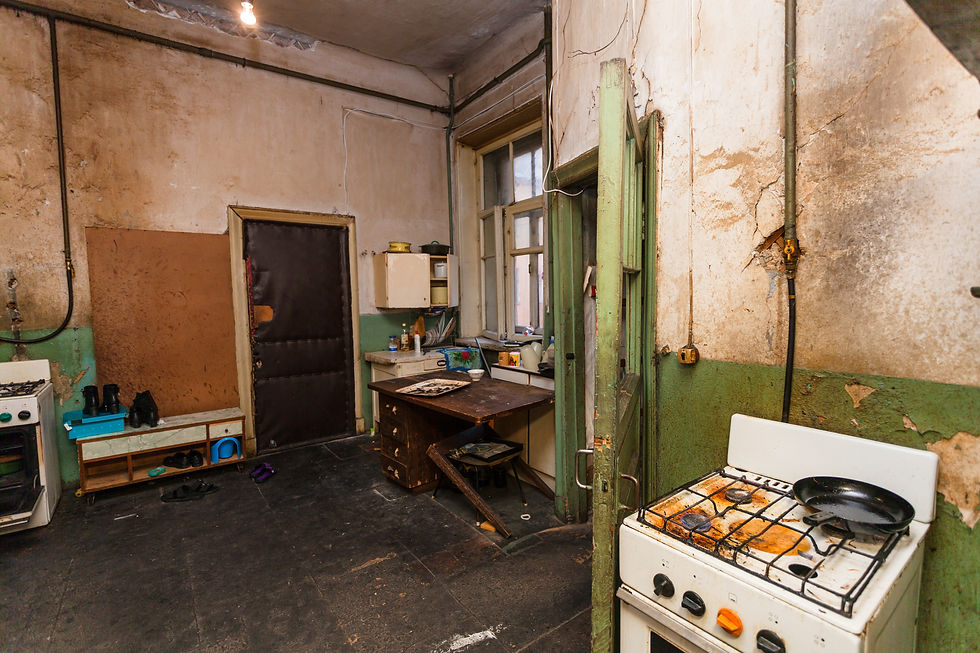
My mother had introduced me to a world of flavors, from spicy curry and tender pepper pot to sweet sorrel and rum-rich black cake. She made sure I knew that the best chocolate in the world came from her country. I remembered the gentle guidance of her delicate, deep mahogany hands, showing me how to level off measuring cups and spoons; and her words of encouragement as she assured me that I didn’t need the recipe because my mind, heart, and soul would write it down in ways that could never be forgotten. She loved how she was able to teach me math and chemistry through it all even though I hated both subjects. She lived for positive subversion.
I cracked the egg lightly against the counter, not on the bowl’s edge or with a fork, because that’s the way my mother had taught me to do it so opening the shell would be easier. The slippery contents slid into the glass bowl and sat staring back at me, a sun of lipids colored with carotenoid pigments lounging in a small sea of transparent protein. There was a tiny blood spot in the yolk—not proof of fertilization, the idea of which had made seven-year-old me cry in sadness and shame, but from a ruptured blood vessel in the hen’s ovary. Proof of effort, a mother’s organic signature.
I hesitated with a fork in my hand, not wanting to disrupt the hen’s perfect act of creation: her art even in the face of the end of her species. My nose stung with the old, familiar sadness and shame, but now, sixty years later, for a different reason.
I drew in a deep breath and exhaled, “Thank you”, before I let the metal tines pierce the yolk, then blended, mixed, and aerated in quick strokes. I sifted, added, stirred, and poured in a ritual I knew so well and that brought me a measure of calm as I thought about what I had to do.
The walk to the camp took a while since I walked slowly in the blistering heat. I gripped the cooler in my arms, and wrapped my head in a light cloth that undoubtedly made me look like one of the people who had been attacked and deported. But I didn’t care.
A few neighbors watched me from their windows. I had told them where I was going and what I was doing, and none of them looked pleased. “They’ll want more,” was the most common complaint. And I’d responded, “Yes, exactly.” Most of them didn’t get it. But Andrew did. Fifteen years old, White, tall, lanky and awkward, he ran out to bring me a tin of water to drink and a lumpy pillowcase full of something he’d made.
“It won’t be enough,” he lamented, “But maybe if they share.” I nodded, kissed his cheek, and gave him my sunglasses because he deserved them.
The armed guards at the fence gate didn’t want to let me through until I told them I wasn’t coming back and they could use my house. They warned me that they’d heard the camps weren’t safe anymore and that the very existence of them might be under threat. They didn’t want to share more, but it didn’t matter. It didn’t take a degree in history to figure out what was likely coming next.
The walk to the entrance of the camp was even longer because I was leaving behind so much and going toward even more. As soon as I arrived, I paid the guards the rest of my money so they would let me keep my items. They still wanted to inspect them, and when they did and I told them what they were for, they said I was crazy. It would cause a frenzy and they couldn’t allow that. The camp was at capacity and safety was an issue. I asked if there was a children’s clinic, for the ones who weren’t going to make it. That shut them up, because there was, and they knew, with the last shred of their humanity, that the only answer was to take me there.
The beleaguered doctors let me set up a table in the middle of the ward. There were over two dozen children ranging in age from eighteen months old to thirteen years old, in various stages of severe illness; a couple near death, many from malnutrition they’d endured on the trip to the camp, but most from illnesses that had been preventable when I was a child—polio, measles, mumps, tetanus, diphtheria, and Hib. It was not an easy thing to see. I laid my cooler and the pillowcase on the table and took deep breaths to settle my emotions. This was about them, not me.
I told them I was there to give them something special because things had been so hard for them. I opened the cooler and lifted out a simple, chocolate frosted sheet cake, the first kind of cake my mother had taught me to bake. There were so many of them that I had to cut the cake into small pieces so all could get some. One of the doctors brought me a scalpel, which helped divide the cake among the children.
Some of them had never had something sweet before, let alone chocolate. There were a few messy smiles, some looks of shock, and the thirteen-year-old who said, “Shit, that’s good!” It made us all laugh, though many of the doctors were openly weeping. They had been facing the worst kind of suffering daily and watching hope slip away with a devastating cruelty. Surely, that took a toll on them. Knowing they could use the boost, I asked the doctors to give out the little stuffed animals Andrew had sewn from a soft gray blanket and some rags. Again, there weren’t enough to go around, so some kids held a small dog or elephant for a few minutes before passing it on to another child. All as Andrew had hoped.
My son believed in freedom. He did not believe in maintaining the peace if it was forcibly denied. And in his memory, in a false bottom of the cooler, were a variety of weapons that could be deployed to protect the CA District 5 camp refugees when the time called for it. In the meantime, I used my most powerful weapon yet—compassion.
My mother had taught me that it’s not just whether we survive, but how we live, love, and fight before we leave this world that makes all the difference. She used to smile at me, in her soft, sweet, accent and say, “Don’t wait.”

Melody Cooper is an award-winning writer and director whose work spans theater, television, film, prose, and comics. Her fiction has appeared in African Ghost Short Stories (Flametree) and Best Climate Change Stories (Secant Publishing), while her comics credits include OMNI (Humanoids) and “Igbo Landing” in Noir Is the New Black.
In 2024, Cooper was selected for the Rockefeller Foundation’s Bellagio Center Residency in Italy, where she worked on her speculative climate novel The Tree Remembers. She was a fellow in the 2025 Rideback Rise Accelerator to develop a sci-fi horror feature film, NATURAL SELECTION, for which she also directed a short proof-of-concept film.
A recipient of both the Athena List Award and a Disney Development Grant, Cooper earned recognition this year for her dramatic thriller screenplay CYGNUS. Her screenwriting credits include selling an original genre television series to Netflix and developing an adaptation of the fantasy novel Beasts of Prey for the streaming platform. Additional credits include Law & Order: SVU, Two Sentence Horror Stories, and Power Book IV: Force.
Cooper is a Sundance Institute alumna and co-founder of the Nyx Horror Collective, which produced 13 Minutes of Horror for Shudder. She currently develops projects for television and film, including an adaptation of Liz Kessler’s beloved Emily Windsnap series. She holds a BFA from Adelphi University.


The narrative of the final egg serves as a poignant reminder of the fragility and potential inherent in our beginnings. Such stories often encourage us to reflect on our own creative impulses and the legacy we wish to leave behind. To further explore your artistic side, you might consider using printable fantasy illustrations to express your personal vision. Engaging in simple, visual projects can be a meditative way to process complex themes.
Nature photography often captures the most fragile moments of life in the wild. For those looking to create a portfolio or a dedicated site for their work, exploring various design platform assessments can simplify the branding process. Having access to versatile tools allows for more creative freedom when showcasing professional projects. It is always beneficial to leverage modern technology to support artistic endeavors.
I really enjoyed reading this story because it demonstrates how powerful thoughtful fiction can be in exploring deeper emotions and universal themes. Stories like "The Last Egg" encourage readers to slow down, reflect, and interpret the symbolism and meaning behind the narrative, making the reading experience much more memorable than simply following a plot. I also appreciate how literary platforms continue to showcase diverse voices and creative storytelling, giving readers the opportunity to discover unique perspectives and styles they might not encounter elsewhere. Balancing my university workload with reading quality literature can sometimes be challenging, but Assignment Help UK has helped me stay organised and manage my academic responsibilities more effectively, giving me more time to enjoy thought-provoking stories like this. Thank…